How many volts does a piezo buzzer need?
 Oct 23, 2026|
 View:6050
Choosing the wrong voltage for a piezo buzzer can lead to weak sound output, an incompatible drive circuit, or damage to the component. For electronics engineers, product designers, and purchasing teams, understanding piezo buzzer voltage is essential before selecting a component for an alarm, appliance, control panel, or battery-powered device.
There is no single voltage that applies to every piezo buzzer. The required electrical signal depends on whether the buzzer is active or passive, its rated input, the drive circuit, and the sound output required by the application. This guide explains how to determine the appropriate voltage, compare common configurations, and evaluate specifications before purchasing.
Key Takeaways
Piezo buzzer voltage depends on the product design, operating mode, and electrical drive requirements.
An active piezo buzzer generally contains an internal oscillator and operates from its specified DC supply.
A passive piezo buzzer typically requires an external alternating or pulsed signal to generate continuous sound.
Higher drive voltage may increase sound output under specified conditions, but the relationship is not universal and the maximum rating must not be exceeded.
Before purchasing, buyers should verify rated voltage, signal amplitude, frequency, sound pressure level, current, dimensions, and environmental requirements.
What Is a Piezo Buzzer and How Does It Work?
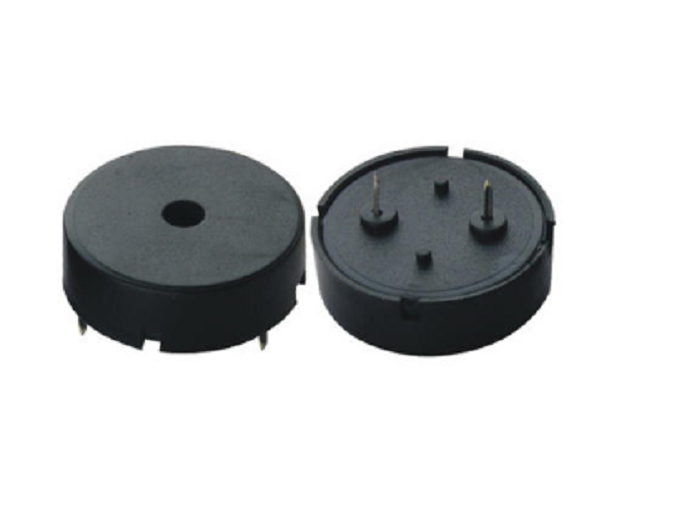
A piezo buzzer is an electronic sound-producing component that uses the piezoelectric effect. When an electrical field is applied to a piezoelectric ceramic material, the material changes shape slightly. Repeated changes in shape create mechanical vibration, which generates sound waves.
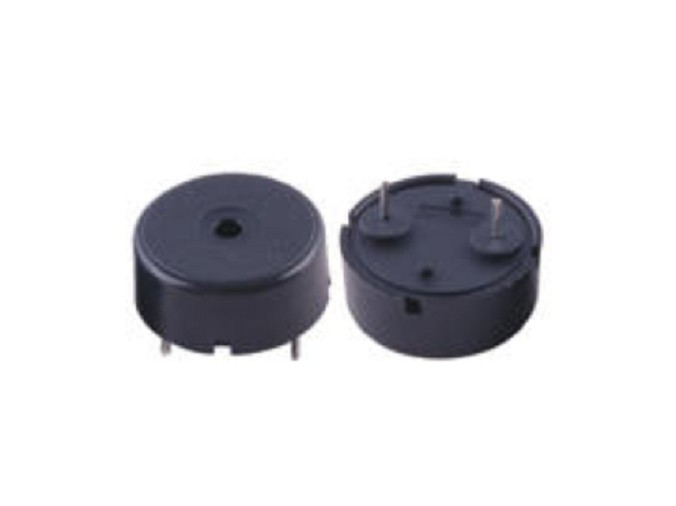
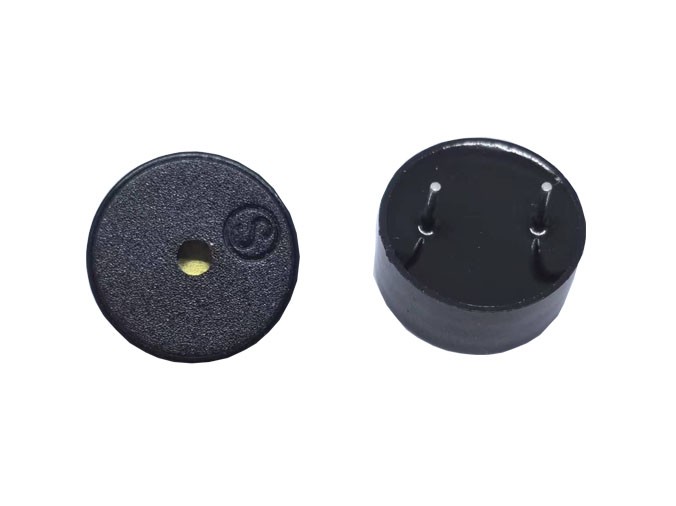
A typical piezoelectric sounder contains a ceramic element, electrodes, a supporting structure or diaphragm, and a housing. The structure of the housing and the mounting conditions influence the acoustic output. Some products also include an internal oscillator or driver circuit, while others require an external signal source.
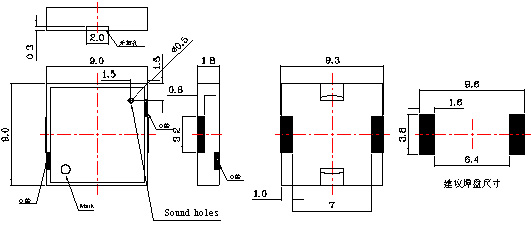
Piezo buzzer selection should be based on the electrical and acoustic specifications of the individual model.
The operating principle matters because a buzzer's voltage requirement cannot be determined from its appearance alone. Two components with similar dimensions may use different drive methods and have different electrical ratings.
How Many Volts Does a Piezo Buzzer Need?
The correct piezo buzzer voltage is the voltage or signal amplitude specified for the selected model. Common product options include 3 V, 5 V, 9 V, 12 V, and 24 V configurations, but these values do not represent a universal operating range for every piezo buzzer.
For example, Shenghui Electronic lists products with different electrical and acoustic specifications, including a 3 V, 4 kHz, 65 dB micro piezo buzzer, a 5 Vp-p, 5.2 kHz, 70 dB SMD piezo buzzer, and a 12 VDC, 4 kHz, 85 dB SMD piezo buzzer. These are individual product specifications, not interchangeable operating settings.
Common Piezo Buzzer Voltage Options
| Voltage Reference | Typical Design Context | What Buyers Should Verify |
|---|---|---|
| 3 V | Low-voltage electronic devices and selected battery-powered applications | Minimum operating voltage, required signal type, and sound output |
| 5 V | Many low-voltage control circuits and embedded electronics | Whether the rating refers to DC supply voltage or peak-to-peak drive voltage |
| 9 V | Selected buzzer models designed for a 9 V input or drive signal | Model-specific voltage limits, driver compatibility, and acoustic performance |
| 12 V | Selected control, alarm, and equipment applications | Whether the product requires 12 VDC or a specified AC or pulsed signal |
| 24 V | Selected higher-voltage control and industrial equipment designs | Rated input, transient conditions, drive circuitry, and operating limits |
The table describes common design contexts, not a guarantee that every buzzer is available in each voltage. A 5 VDC active buzzer and a passive transducer specified at 5 Vp-p, for example, cannot be assumed to use the same drive circuit.
DC Voltage vs. Peak-to-Peak Voltage
One important selection detail is the difference between DC voltage and peak-to-peak voltage. DC voltage describes a steady supply level. Peak-to-peak voltage, written as Vp-p, describes the difference between the highest and lowest points of a changing electrical waveform.
A passive piezo transducer may be specified by the amplitude of the AC or pulsed signal applied across its terminals. Its drive voltage should not be interpreted as an equivalent DC supply requirement. Buyers should confirm the input type and waveform stated in the datasheet before connecting the component.
Active vs. Passive Piezo Buzzer Voltage
The distinction between active and passive piezo buzzers is one of the most important factors when determining the correct voltage and control method.
Active Piezo Buzzer
An active piezo buzzer generally incorporates an oscillator or driver circuit. When the specified DC supply is applied, the internal circuit generates the electrical signal needed to produce a characteristic tone. This arrangement is useful when an application needs a simple audible alert controlled by switching the supply or enable input.
Active buzzers are available with different rated voltages. A 3 V model should not automatically be treated as suitable for a 5 V supply, and a 12 V model should not be assumed to operate correctly from a lower-voltage controller without checking its specifications.
Passive Piezo Buzzer
A passive piezo buzzer or transducer generally does not contain the oscillator needed to generate a continuous tone from a steady DC supply. Instead, an external circuit supplies an alternating or pulsed signal at an appropriate frequency.
This arrangement allows the control circuit to change the signal frequency and create different tones, provided that the transducer supports the required operating conditions. Its allowable input voltage depends on the specific element and drive method.
| Characteristic | Active Piezo Buzzer | Passive Piezo Buzzer |
|---|---|---|
| Internal oscillator | Generally included | Generally not included |
| Typical input | Specified DC supply | External AC or pulsed drive signal |
| Tone control | Usually limited by the internal design | Can be controlled by changing the drive signal within the permitted range |
| Voltage selection | Match the rated supply voltage and operating limits | Match the transducer's allowable signal amplitude and drive conditions |
| Typical application | Simple warning and status alerts | Applications requiring externally controlled tones |
Neither type is automatically suitable for every application. The choice depends on whether the design needs simple on/off sound control or more flexible signal generation, as well as the available power supply and circuit architecture.
Looking for a Piezo Buzzer with the Right Voltage?
Compare available models and check their electrical and acoustic specifications against the requirements of the intended application.
Explore Piezo BuzzersContact UsHow Does Voltage Affect Piezo Buzzer Sound Output?
Voltage is one factor affecting the sound pressure level (SPL) of a piezo buzzer. SPL measures the sound pressure produced by the component under specified test conditions and is commonly expressed in decibels (dB).
For a given piezo transducer, increasing the drive amplitude may increase mechanical displacement and sound output within its intended operating range. However, the result depends on the piezo element, operating frequency, waveform, housing, mounting, and test distance. The relationship between voltage and SPL should be taken from the product datasheet rather than assumed to be a fixed ratio.
Why Voltage Alone Does Not Determine Loudness
Resonant frequency: A piezo buzzer's acoustic output can vary substantially with the drive frequency and the resonance of its structure.
Waveform: A square wave, sinusoidal signal, and other drive waveforms can produce different results at the same nominal voltage.
Mechanical mounting: The enclosure and mounting surface can change how vibration is transferred into the surrounding air.
Measurement conditions: SPL comparisons are meaningful only when the test distance, frequency, input signal, and other conditions are comparable.
Maximum ratings: Driving a buzzer beyond its specified limits may damage the component or reduce its reliability.
How to Drive a Piezo Buzzer Safely
Using a Microcontroller
Microcontrollers such as Arduino boards can generate digital signals for compatible piezo buzzers. For a passive piezo transducer, a function such as tone() can generate a square wave at a selected frequency. An active buzzer, by contrast, usually requires a compatible DC supply and a suitable switching or enable signal.
The controller's output pin must remain within its electrical limits. If the buzzer or its driver requires more current than the pin can provide, a suitable transistor or dedicated driver circuit may be necessary. The circuit design should follow both the controller documentation and the buzzer datasheet.
// Example: generating a tone for a passive piezo transducer
const int buzzerPin = 8;

void setup() {
  pinMode(buzzerPin, OUTPUT);
}

void loop() {
  tone(buzzerPin, 2000, 500);
  delay(1000);
}
This example generates a 2 kHz signal for 500 milliseconds, followed by a delay. It illustrates signal generation for a passive transducer; it is not a universal drive circuit for every piezo buzzer. Board-specific pin limitations and the transducer's rated input must be checked before use.
When Is a Driver Circuit Needed?
A driver circuit may be needed when the controller cannot provide the required signal amplitude or current, or when the design needs a specific waveform. Depending on the transducer and application, a driver may use a transistor, MOSFET, bridge circuit, or dedicated driver IC.
Some piezo transducers are primarily capacitive loads, while complete buzzer assemblies may contain additional electronics. Engineers should therefore avoid assuming that all piezo buzzers behave like inductive loads or share the same protection requirements.
For passive piezo elements, the drive circuit must also respect the permitted voltage waveform and peak-to-peak limits. Any circuit capable of generating a voltage higher than its supply requires careful design and verification to prevent electrical overstress.
Does a Piezo Buzzer Need a Resistor?
A resistor is not universally required for every piezo buzzer circuit. The need for a resistor depends on the transducer, driver topology, switching method, and manufacturer's recommendations. In some circuits, a resistor may help control charging and discharging current or establish a defined electrical state.
For a passive piezo element, the driver should be designed around its electrical characteristics rather than applying a generic resistor value. For an active buzzer, the internal circuit and supply requirements must also be considered. Always follow the component datasheet and the driver circuit design requirements.
Piezo Buzzer Voltage Selection Checklist
Choosing a piezo buzzer for a commercial product involves more than matching the nominal voltage. Engineers and purchasing teams should evaluate electrical, acoustic, mechanical, and environmental requirements together.
| Specification | Why It Matters | What to Confirm |
|---|---|---|
| Rated voltage | Determines electrical compatibility | Nominal voltage, allowable range, and whether the value is DC or Vp-p |
| Drive method | Determines circuit requirements | Internal oscillator, external waveform, polarity, and driver configuration |
| Frequency | Affects tone and acoustic output | Rated frequency and recommended operating frequency |
| Sound pressure level | Indicates expected acoustic output | dB rating, test distance, input conditions, and measurement method |
| Current and power | Influences power supply and battery design | Rated current, peak demand where specified, and operating duty cycle |
| Dimensions and mounting | Affects mechanical fit and acoustic performance | Package size, terminal layout, mounting method, and sound outlet clearance |
| Environment | Affects operating stability and service life | Temperature, humidity, water or dust exposure, and relevant product ratings |
Consider the Application Before Selecting Voltage
Battery-powered electronics may prioritize low-voltage operation and power consumption. Industrial control equipment may require compatibility with a particular supply rail, while consumer appliances may have specific limits on size, sound output, and installation. The buzzer's rated voltage should match the intended electrical design rather than being selected solely because it is a familiar value.
For overseas procurement, the specification sheet should also identify the exact model and revision. This helps prevent confusion between visually similar products with different input requirements, dimensions, sound characteristics, or mounting configurations.
Need Help Matching Buzzer Specifications to Your Design?
Prepare the required voltage, drive type, frequency, sound pressure level, package dimensions, and operating environment before discussing suitable options with the manufacturer.
View Product OptionsGet a QuotePiezo Buzzer Product Options
Different applications require different combinations of voltage, package size, frequency, and sound pressure level. The following examples illustrate the types of specifications that buyers may compare when reviewing piezo buzzer products. The full product datasheet should be consulted before making a final selection.
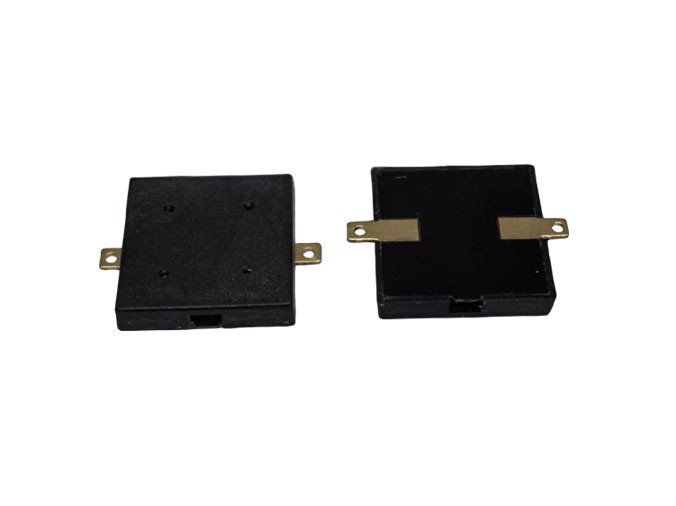
SMD Piezo Buzzer Series
Explore piezo buzzer options for electronic alarms, indicators, and notification systems. Compare input requirements, frequency, sound output, and package dimensions to identify a suitable model.
View Product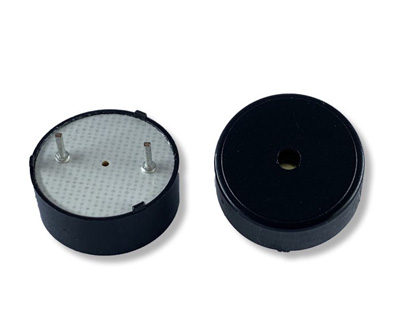
Passive Piezo Buzzer
Passive piezo buzzer models can be considered for space-constrained electronic devices. Verify the actual dimensions, rated voltage, sound pressure level, and recommended drive conditions for each model.
View Product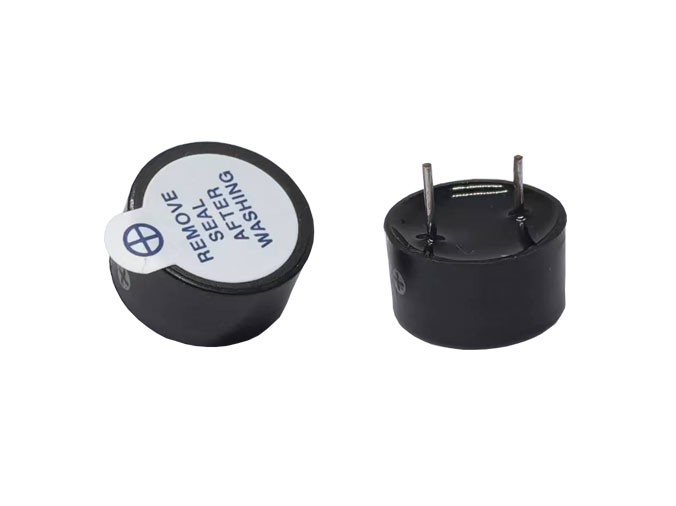
Active Piezo Buzzer
Surface-mount options may suit automated PCB assembly. Check package dimensions, soldering conditions, electrical input specifications, and acoustic performance before production.
View ProductConclusion: How to Choose the Correct Piezo Buzzer Voltage
The correct piezo buzzer voltage depends on the specific component and its drive circuit. Active models generally operate from a specified DC supply, while passive piezo transducers require an appropriate alternating or pulsed signal. The rated voltage, waveform, frequency, sound pressure level, and electrical limits must be evaluated together.
Engineers should avoid selecting a buzzer based on voltage alone or assuming that increasing the input will always produce a predictable increase in loudness. A model-specific datasheet provides the most reliable basis for circuit design, product comparison, and purchasing decisions.
For overseas buyers seeking a reliable piezo buzzer manufacturer, Shenghui Electronic offers a range of piezo buzzer options for different electrical and acoustic requirements. Buyers can review the available products and contact the company to discuss model specifications and application needs.
Discuss Your Piezo Buzzer Requirements
Share the target voltage, signal type, sound pressure level, dimensions, and application details to help narrow down suitable product options.
Explore Piezo Buzzer ProductsContact ShenghuiFrequently Asked Questions
Can a piezo buzzer run on 5 volts?
Yes, some piezo buzzers are designed for 5 V operation. However, the input requirements vary by model and drive type. A 5 VDC active buzzer and a passive transducer rated at 5 Vp-p may require different circuits. Buyers should check the product datasheet before applying power.
What happens if a piezo buzzer receives too much voltage?
Exceeding the specified input voltage or signal amplitude can damage the piezoelectric element or internal electronics, alter acoustic performance, or shorten service life. The allowable voltage depends on the product design and waveform. Engineers should remain within the manufacturer's rated limits.
Does a passive piezo buzzer need AC voltage?
A passive piezo buzzer generally requires an alternating or pulsed drive signal to generate continuous sound. A steady DC input may produce only a brief click when the voltage changes rather than a sustained tone. The recommended waveform and frequency should be checked in the datasheet.
Does a higher voltage make a piezo buzzer louder?
Increasing the drive voltage may increase sound output within the permitted operating range, but the relationship depends on the transducer, drive frequency, waveform, housing, and mounting. The manufacturer's SPL specifications and test conditions should be used when comparing different models.
Can a piezo buzzer connect directly to an Arduino?
Some low-power buzzers can be connected directly to a compatible output, but this is not appropriate for every model. The controller's electrical limits and the buzzer's drive requirements must be checked. A transistor or dedicated driver may be needed when additional current or signal amplitude is required.