

What is a piezo buzzer made of?
 Sep 28, 2025|
 View:883
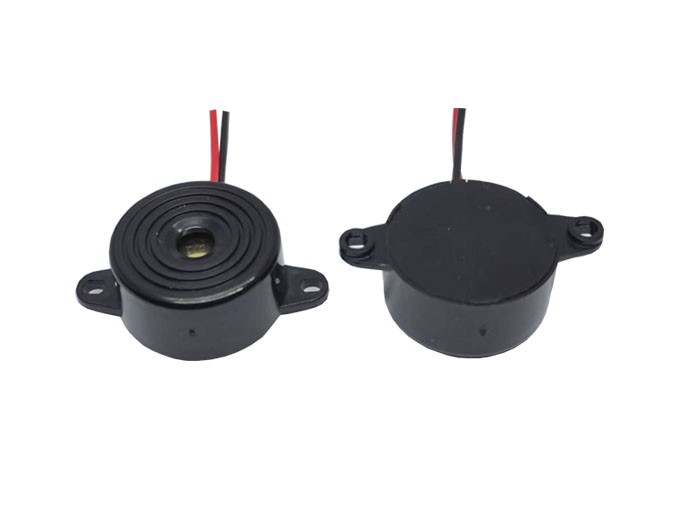
A piezo buzzer is an electronic sound-producing component that leverages the piezoelectric effect to generate audible signals. These compact devices have become ubiquitous in modern electronics, found in everything from home appliances and automotive systems to medical equipment and industrial alarms. Their popularity stems from an excellent combination of small size, low power consumption, simple construction, and cost-effectiveness. Understanding what a piezo buzzer is made of requires examining both its physical composition and the underlying principles that enable its operation. This article explores the materials, construction methods, and working mechanisms that make these components essential in today's electronic landscape .
The Piezoelectric Effect: Fundamental Operating Principle
The operation of piezo buzzers centers around the piezoelectric effect, a phenomenon discovered in 1880 by Jacques and Pierre Curie. This effect describes the ability of certain materials to generate an electric charge when subjected to mechanical stress (direct piezoelectric effect), or conversely, to undergo mechanical deformation when exposed to an electric field (inverse piezoelectric effect). Piezo buzzers primarily utilize the inverse piezoelectric effect—applying an alternating electrical field causes the piezoelectric material to alternately expand and contract, producing vibrations that generate sound waves in the air .
This fundamental principle enables the conversion of electrical energy directly into acoustic energy through mechanical displacement. When the applied electrical signal matches the resonant frequency of the buzzer assembly, it produces the highest sound pressure (volume), making these devices particularly effective for applications where audible alerts are critical .
Core Components and Materials
Piezoelectric Ceramic Element
At the heart of every piezo buzzer lies the piezoelectric ceramic element, typically composed of specialized ceramic materials such as lead zirconate titanate (PZT) or lead magnesium niobate. These synthetic materials are engineered to exhibit strong piezoelectric properties .
The manufacturing process involves several precise steps:
Formation: The ceramic powder is pressed into thin discs or rectangles
Electroding: Both sides are plated with silver electrodes to create electrical contacts
Polarization: The material undergoes polarization under high voltage (typically ≥3kV/mm) at elevated temperatures to align its crystalline domains
Aging: The polarized elements are aged to stabilize their piezoelectric properties
This piezoelectric ceramic element is typically bonded to a metal plate using specialized adhesives, creating a composite structure that can efficiently bend and vibrate when voltages applied .
Metal Plate and Vibration Layer
The metal plate (also called the vibration layer or substrate) serves as a crucial component in the buzzer assembly. Typically made from brass, stainless steel, or nickel alloys, this plate performs multiple functions:
Provides mechanical support for the fragile ceramic element
Enhances the vibrational characteristics through its elastic properties
Acts as one of the electrical contacts for the driving voltage
For high-temperature applications requiring operation exceeding 260°C, specialized alloys like Kovar (iron-nickel-cobalt), Inconel (nickel-chromium), or molybdenum may be employed to maintain structural integrity and piezoelectric performance under extreme conditions .
The thickness of this metal plate typically ranges from 0.1mm to 1.0mm, with approximately 0.25mm being common. The diameter generally falls between 10mm and 40mm, with 25-30mm being typical for standard applications .
Housing and Resonance Components
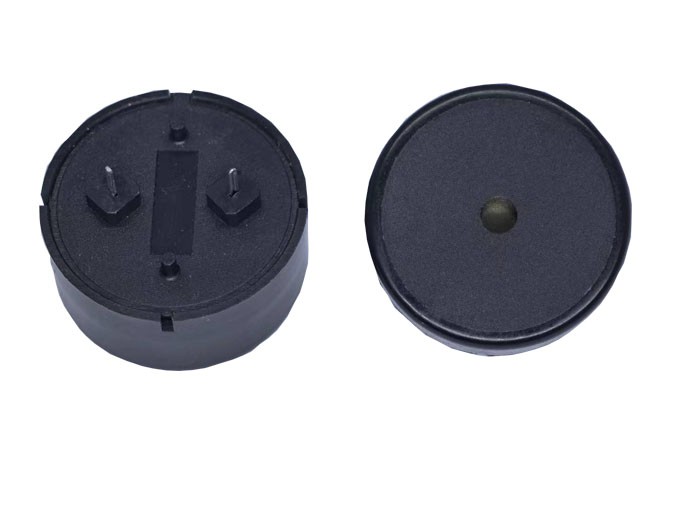
The housing or enclosure serves multiple purposes beyond simple protection. Made typically from plastic or metal, the housing includes:
Resonance box/chamber: Designed to amplify sound by matching the acoustic resonance frequency with the vibration frequency
Sound release hole: Allows sound waves to efficiently escape the enclosure
Mounting features: Enable secure installation in end products
The housing design significantly impacts the acoustic performance—when the resonance frequency of the vibration plate (fo) aligns with the resonance frequency of the housing cavity (fcav), the sound pressure can increase by 10-20 dB, substantially boosting the audible output .
Classification of Piezo Buzzers
Active vs. Passive Buzzers
Piezo buzzers are categorized based on their driving requirements:
Active buzzers (self-excited or with drive series) contain built-in oscillation circuits, typically comprising transistors or integrated circuits that generate the necessary audio frequency. When DC voltage is applied (typically 1.5-15V), these buzzers produce sound immediately without external timing components. The internal multivibrator outputs an audio signal typically ranging from 1.5kHz to 2.5kHz .
Passive buzzers (external drive series or without oscillator circuit) lack internal oscillation circuitry and require an external drive signal, usually a square wave between 2kHz-5kHz. While more complex to implement, passive buzzers offer greater control over frequency, allowing for musical tones or variable pitch signals .
The visual distinction is often apparent—active buzzers typically appear as a single unit sealed with black epoxy, while passive buzzers often show a green circuit board with exposed components .
Additional Classification Schemes
Beyond the active/passive distinction, piezo buzzers can be categorized by:
Construction method: Piezoelectric vs. electromagnetic (though piezoelectric dominates)
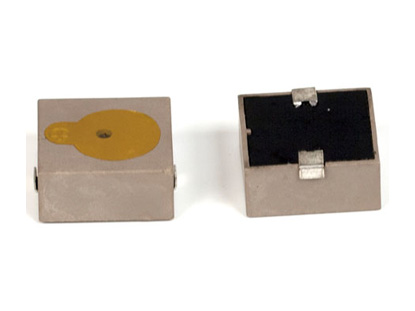
Package type: DIP buzzers (pin-style) vs. SMD buzzers (surface-mount)
Current type: DC buzzers (most common) vs. AC buzzers
Surface-mount piezoelectric buzzers have gained significant popularity in recent years due to their compact size (approximately 70% thinner than pin-type versions), compatibility with automated assembly, and excellent performance characteristics .
Driving Circuits and Excitation Methods
External Drive Requirements
The excitation method significantly impacts the buzzer's performance characteristics. For passive buzzers, external drive circuits must provide appropriate alternating voltages to generate sound. Common approaches include:
Microcontroller-based driving: Using PWM (Pulse Width Modulation) outputs from microcontrollers to generate precise frequency square waves. The microcontroller's I/O pins can directly drive the buzzer through current-limiting resistors, with typical drive frequencies matching the buzzer's resonant frequency (often 2-4kHz) for maximum sound pressure .
Discrete component circuits: Utilizing transistors (often in NPN configurations) to switch higher voltages than microcontrollers can directly provide. This approach allows for higher drive voltages (up to 28V in some designs), significantly increasing sound pressure output .
Voltage Boosting Requirements
Since piezoelectric buzzers achieve their highest sound pressure when driven at voltages significantly higher than typical battery supplies (often 20-30V), many applications incorporate boost converter circuits. Specialized integrated circuits like TI's TLV61046A can efficiently convert low battery voltages (1.8-5.5V) to the higher voltages required for optimal buzzer performance while providing protection features like overvoltage protection and short-circuit protection .
Advanced drive schemes can generate bipolar drive signals (±15V or higher) across the buzzer element, effectively doubling the peak-to-peak voltage swing and further increasing sound output without requiring higher voltage power supplies .
Manufacturing Processes and Quality Control
Production Workflow
The manufacturing of piezoelectric buzzers follows a meticulous process to ensure consistent performance and reliability:
Piezoelectric element production:
Raw material preparation and mixing of ceramic powders
Slurrying and pulverization in ball mills until homogeneous
Drying at 100-150°C
Calcining at high temperatures (up to 1000°C) to form the perovskite crystal structure
Formation into final shapes and dimensions
Electrode application (silver plating)
Polarization under high-voltage fields
Aging to stabilize piezoelectric properties
Assembly process:
Bonding piezoelectric elements to metal substrates
Electrical connection establishment
Housing assembly and sealing
Performance testing and quality verification
Quality Assurance and Testing
Rigorous testing ensures piezo buzzers meet specification requirements:
Sound pressure level measurement at specified distances (typically 10cm) and frequencies
Resonance frequency verification to ensure proper operational characteristics
Temperature resistance testing, particularly for high-temperature variants
Endurance testing through extended operation cycles
Environmental testing including resistance to moisture, corrosive gases, and mechanical stress
Industry standards such as SJ/T 10660-1995 in China and AEC-Q200 for automotive applications define specific testing protocols and performance requirements for piezoelectric buzzers used in various applications .
Performance Characteristics and Advantages
Key Performance Metrics
Piezoelectric buzzers exhibit several important performance characteristics:
Electrical properties:
Low power consumption (typically 0.3-0.5mA compared to 20mA for electromagnetic counterparts)
Wide operating voltage range (1.5V to 15V DC for many models)
High impedance nature, requiring minimal current drive
Acoustic properties:
Sound pressure levels typically ranging from 70dB to over 100dB (at 10cm distance)
Frequency responses optimized for the human auditory range (2kHz-4kHz where hearing is most sensitive)
Clear, penetrating tone quality ideal for alert signals
Physical properties:
Compact dimensions and thin profiles
Lightweight construction
Robustness and resistance to physical shock
Comparative Advantages
The materials and construction of piezoelectric buzzers provide distinct advantages over alternative technologies like electromagnetic buzzers:
Size and weight benefits: Piezoelectric designs are typically thinner and lighter than equivalent electromagnetic buzzers, making them ideal for space-constrained applications .
Power efficiency: With current consumption often below 1mA, piezo buzzers significantly extend battery life in portable devices .
Reliability and longevity: The solid-state construction with no moving coils or contacts provides excellent long-term reliability and resistance to mechanical wear .
Cost-effectiveness: Simplified construction and minimal raw material requirements keep manufacturing costs low, particularly for high-volume production .
Applications Across Industries
The unique combination of properties makes piezoelectric buzzers suitable for diverse applications:
Consumer electronics: Used in computers, printers, microwave ovens, air conditioners, and electronic toys for user interface feedback and alert signals .
Automotive systems: Employed in reverse alarms, seat belt reminders, turn signal indicators, and various warning systems. Automotive-grade buzzers must meet stringent reliability standards like AEC-Q200 .
Medical equipment: Found in glucose meters, ECG monitors, fetal heart testers, and other medical devices where reliable audible cues are critical. The low power consumption is particularly valuable in portable medical equipment .
Security systems: Used extensively in smoke detectors, burglar alarms, electronic locks, and personal alert safety systems (PASS) for firefighters, where high sound pressure and reliability are essential .
Industrial applications: Deployed in timing devices, instrumentation, machinery status indicators, and underground mine alarms .
Conclusion
The piezo buzzer represents a remarkable convergence of materials science, electrical engineering, and acoustic design. Its construction—centered around specialized piezoelectric ceramics bonded to metal substrates and housed in resonant enclosures—enables efficient conversion of electrical signals into audible sound. The continuing evolution of piezoelectric materials, drive electronics, and manufacturing techniques ensures that these components will remain vital in the ever-expanding universe of electronic devices, providing the audible interface between technology and its users across countless applications.