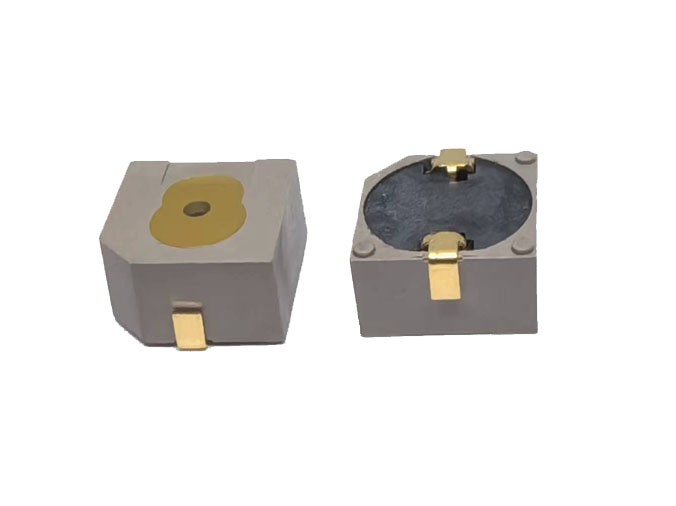


 Oct 23, 2025
 View:723
Imagine your phone makes a sound when you get a message. Your microwave also beeps when your food is done. These sounds come from a magnetic transducer buzzer. You hear these alert sounds every day at home. They are in personal devices and entertainment systems too. Buzzers and sounders help make electronics safer. They also make them easier to use. The world market for these parts is growing very fast. It is worth $1.73 billion in 2024. It may reach $4.11 billion by 2033. Why are these small buzzers so important and dependable?
Key Takeaways
Magnetic transducer buzzers change electricity into sound. They are important for alerts in things like phones and microwaves. These buzzers need less voltage and save energy. This helps batteries last longer in portable devices. If you know the parts of a buzzer, like the coil and diaphragm, you can see how sound is made. Magnetic buzzers can be used in many places. They work in medical tools, cars, and electronics people use. Picking the best buzzer for your device gives clear alerts and good performance. This makes using the device better for people.
Magnetic Transducer Buzzer Basics

What Is a Magnetic Transducer Buzzer
Every time you hear a beep from your device, a magnetic transducer buzzer is working. This small part makes sound by changing electricity into movement. It uses electromagnetic ideas to work. When you turn it on, electricity goes through a wire coil. This makes a magnetic field. The field pulls a thin metal disk. The disk moves back and forth and makes sound. Magnetic transducer buzzers use less voltage but need more current than piezo buzzers. They also have smaller frequency ranges and make softer sounds. These buzzers are good for devices that need simple sound alerts and do not use much power.
Tip: Magnetic transducer buzzers are not the same as piezo buzzers. Piezo buzzers need more voltage. Magnetic transducer buzzers use less voltage but need more current.
Main Components
A magnetic transducer buzzer has many important parts. Each part helps make the sound you hear. Here is a table that shows the main parts:
| No. | Name of Parts |
|---|---|
| 1 | Casing |
| 2 | Vibrating Weight |
| 3 | Cavity |
| 4 | Vibrating Disk |
| 5 | Magnet |
| 6 | Pole |
| 7 | Coil |
| 8 | Yoke Plate |
| 9 | PCB |
| 10 | Transistor |
| 11 | Epoxy |
| 12 | Pin |
The coil and magnet work together to move the vibrating disk. The casing keeps all the parts safe inside. The PCB and transistor help control the electricity. Each part does something special. When you use a device with a magnetic transducer buzzer, these parts work together to give you clear sound alerts.
How a Buzzer Works
Electromagnetic Principle
Electromagnetic buzzers are in many things that need sound alerts. These buzzers use a simple idea that works well. When you send electricity into the buzzer, it makes a magnetic field. This field moves a small part inside the buzzer. That movement makes the sound you hear. Piezo buzzers use special crystals, but electromagnetic buzzers do not. They use the power between electricity and magnetism instead.
Note: Electromagnetic buzzers make sound by using a magnetic field to move a part inside.
Here is how it works:
Electricity goes through a coil in the buzzer.
The coil makes a magnetic field.
The magnetic field moves a metal disk or diaphragm.
The moving disk makes sound waves.
This way, electromagnetic buzzers give steady sound alerts in many devices. People use these buzzers for alarms and notifications because they are simple and work well.
Sound Generation Process
The coil, magnet, and diaphragm all help make sound in a buzzer. When you send a changing electrical signal to the coil, it makes a changing magnetic field. This field pushes and pulls on the magnet inside. The force makes the coil move back and forth. The coil is connected to a thin diaphragm, so it moves too. When the diaphragm shakes, it pushes air and makes sound waves.
Here are the steps:
You send a changing electrical signal to the coil.
The coil makes a changing magnetic field.
The magnetic field pushes and pulls the magnet, so the coil moves.
The moving coil makes the diaphragm shake.
The shaking diaphragm makes sound waves.
To make the buzzer work right, you need a special electrical signal called an excitation waveform. This signal tells the buzzer when and how to shake. The shape and speed of the signal change the sound you hear. You can use different signals to make the sound higher, lower, louder, or softer. The circuit that runs the buzzer uses switches like BJTs or FETs to make the signal stronger. A diode keeps the circuit safe by stopping extra voltage when the switch turns off fast.
Tip: The right electrical signal helps you control the sound of electromagnetic buzzers, so they can be used in many ways.
Electromagnetic buzzers are not as loud as piezo buzzers. They use less voltage and are good for things that need simple sound alerts. You will see these buzzers in products where a soft, clear sound is better than a loud one.
Key Features of Buzzers
Efficiency and Power Use
Buzzers are known for saving energy. Magnetic buzzers use less voltage and current. This helps your device’s battery last longer. They are great for things like watches and remotes. You can see how magnetic buzzers and piezo buzzers are different in this table:
| Specification | Piezo Buzzers | Magnetic Buzzers |
|---|---|---|
| Resonant Frequency (f0) | 2-6 kHz | 1-3 kHz |
| Operating Voltage (V) | 3-250V | 1.5-12V |
| Sound Pressure (SPL) | 85-120 dB | 70-95 dB |
| Current Consumption (I) | <10 mA | 20-60 mA |
The power a buzzer uses depends on a few things. These include the voltage, sound level, frequency, and how often it is on. If you want your device to work longer, pick buzzers that use less power.
Reliability and Durability
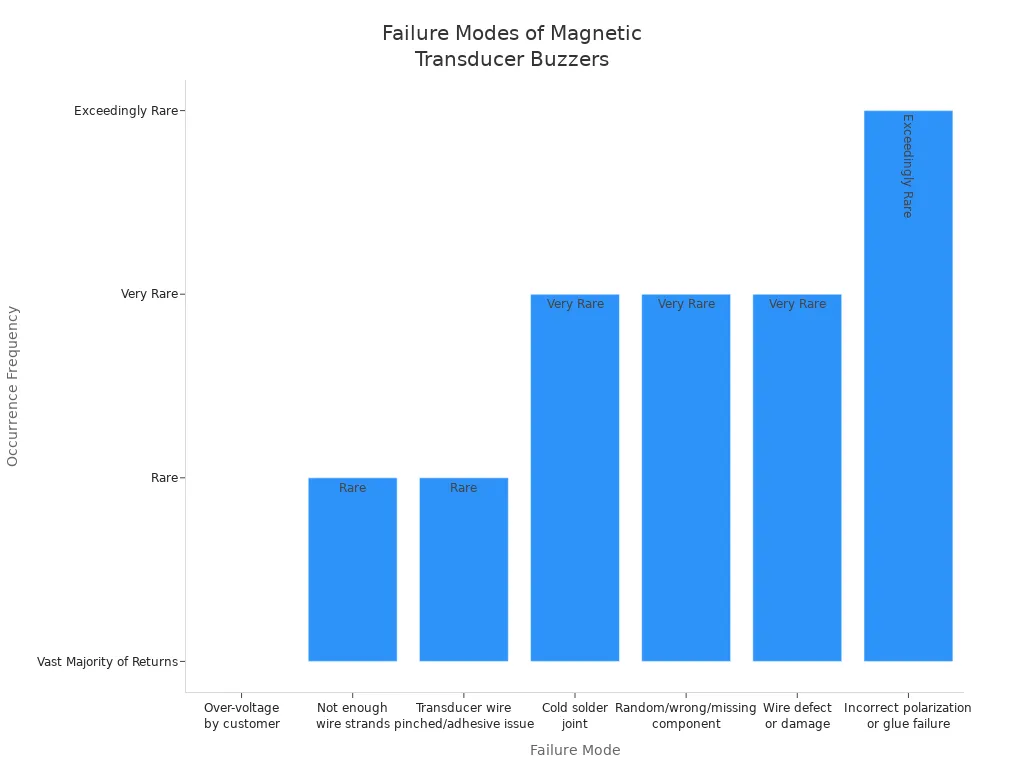
Buzzers need to work well even in hard places. Good design helps them handle shaking and bumps. How you attach the buzzer is important too. In cars or factories, buzzers get shaken more, so they must be strong. Most problems happen from too much voltage or bad soldering, but these do not happen often. The chart below shows how often different problems happen:
Tip: If you mount buzzers the right way, they last longer.
Integration and Versatility
Magnetic buzzers are easy to add to many circuits. Engineers use special signals and switches to change the sound. This lets you make different sounds for alarms or timers. Magnetic buzzers are used in many fields, like medicine and cars. Here are some ways they are used:
| Industry | Application Description |
|---|---|
| Medical Devices | Used in monitors and therapy devices. |
| Telecommunications | Used in wireless systems and fiber optic networks. |
| Consumer Electronics | Used for sound alerts and notifications. |
| Automotive | Used for safety alerts and user notifications. |
These features make magnetic buzzers a good pick for many new devices.
Applications of Magnetic Buzzers

Consumer Devices
You hear magnetic buzzers in your phone and smartwatch. They give you alarms, reminders, and quick alerts. Their small size helps them fit in thin gadgets. You get good sound for alerts without using much space. Magnetic buzzers help save battery because they use little power. This is important for things you carry all day. The table below shows why magnetic buzzers are great for phones and wearables:
| Advantage | Description |
|---|---|
| Compact Size | Thin magnetic transducers can replace traditional speakers, allowing for more space inside devices. |
| Energy Efficiency | They are lightweight and consume less power, which is crucial for battery-operated devices. |
| Versatility in Applications | Can be used for audio output and haptic feedback, enhancing user experience in various devices. |
Most magnetic buzzers in these gadgets make sounds between 2 kHz and 5 kHz. This range gives you clear alarms and notifications.
Industrial and Medical Uses
Magnetic buzzers are important in factories and hospitals. In factories, buzzers alert workers when machines need help. They also beep when a job is done. In hospitals, buzzers warn nurses if a patient needs care. These alarms help keep people safe. Here are some ways buzzers are used:
In machines to warn workers about problems.
In control panels to show faults or low fluids.
In medical tools to give alarms for bad conditions.
Medical buzzers must follow strict safety rules. They do not get hot and use safe materials. They also meet IEC 60601-1-8 rules for medical alarms. This makes sure they are safe and work well for patients.
Automotive and Security
You depend on magnetic buzzers in your car for reminders and alerts. They beep for seatbelts, parking, and dashboard warnings. These buzzers help keep you safe with clear sounds. In security systems, buzzers work with sensors on doors and windows. If someone opens a door without permission, the buzzer makes a loud sound. This fast alarm helps protect your home or business. Magnetic buzzers give good sound and use little power, so they are great for these jobs. Picking the right buzzer makes sure your alarms always work.
You find magnetic transducer buzzers in lots of new devices. They have special features that help your technology work better.
| Feature | Benefit |
|---|---|
| Low Operating Voltage | Helps batteries last longer |
| Easy Integration | Makes building devices easier |
| Small Form Factor | Fits inside small gadgets |
New designs make these buzzers even smaller and better. As technology changes, you will see them in more things, like smart homes and medical equipment. These buzzers also help save energy and cut down on waste. This makes them a good choice for the future.
FAQ
What makes magnetic transducer buzzers easy to use in devices?
Magnetic transducer buzzers fit into many circuits easily. Their small size helps you put them in different products. The wiring is simple, so you do not need extra parts.
How do magnetic buzzers support integration in smart devices?
Magnetic buzzers work with microcontrollers and sensors. You can use them to make custom alerts. This helps smart devices give clear sound signals for many things.
Can you use magnetic buzzers in both new and old devices?
You can use magnetic buzzers in new and old devices. Their flexible design lets you upgrade old systems or build new ones. This keeps your devices working well.
Why is integration important for medical and automotive applications?
Integration connects buzzers to safety systems in cars and medical tools. It helps alarms work fast and clearly. This keeps people safe and helps devices follow strict rules.
What should you check before integration of a magnetic buzzer?
Check the voltage, current, and space in your device first. Good planning means the buzzer fits and works right. You can use tables to compare choices for your project.
Tip: Plan integration carefully to avoid problems and get the best sound from your buzzer.