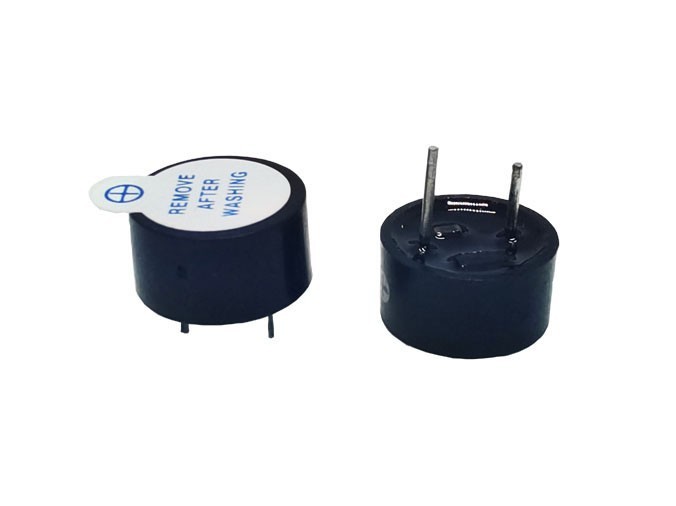


 Oct 27, 2025
 View:982
You will see a big difference between active and passive buzzers when you do electronics projects. Active buzzers have driving parts inside. They make sound with just a DC voltage. Passive buzzers need a signal from outside to make sound. You can change the frequency and tone with passive buzzers. This difference is important. It changes how easy it is to add sounds to your project. The table below shows the most common differences.
| Feature | Active Buzzer | Passive Buzzer |
|---|---|---|
| Driving Circuitry | Built-in | None |
| Sound Production | DC voltage | External signal |
| Sound Variety | Fixed frequency | Various frequencies |
| Size | Larger | Smaller |
| Cost | More expensive | Less expensive |
| Control | Easy program control | Frequency controllable |
This guide will help you pick the buzzer that works best for you.
Key Takeaways
Active buzzers are simple to use. They make sound with only DC voltage. They have an oscillator inside. This helps them work well for basic alerts.
Passive buzzers give you more sound options. They need an outside signal to make sound. You can play many tones and tunes with them.
Think about what your project needs before picking a buzzer. Active buzzers work best for easy jobs. Passive buzzers are better for projects needing different sounds.
Look at the power needs and sound level. Make sure the buzzer fits your project's size and power limits. This helps it work its best.
Always follow safety rules. Use buzzers that can handle things like dust and water. This keeps them working well.
Buzzer Basics

What Is a Buzzer
A buzzer is a small part that makes noise when it gets power. People use buzzers in electronics to get your attention or send signals. There are different kinds of buzzers. The most popular ones are piezo and magnetic buzzers.
Here is a table that explains how these two types work:
| Buzzer Type | Components | Operating Principle | Applications |
|---|---|---|---|
| Piezo Buzzer | Piezoelectric materials | Makes sound by using the piezoelectric effect when voltage is given. | Medical alerts, portable electronics |
| Magnetic Buzzer | Electromagnetic coil, metal disk | Makes sound by moving a metal disk with a magnetic field. | Industrial settings, alarms |
Piezo buzzers have special stuff inside that shakes when you give it voltage. Magnetic buzzers use a coil and a metal disk to make noise. Both types help you add sound to your projects, but they work in their own ways.
Tip: Piezo buzzers are in many small gadgets. They last a long time and do not use much power.
Common Uses
You see buzzers in lots of places every day. They help you hear alarms, timers, and alerts. In electronics, piezo and magnetic buzzers are used the most. Piezo buzzers are good for things that need to save power, like watches or medical tools. Magnetic buzzers are used in alarms or big machines because they can be louder.
You might use an active buzzer in a simple project if you only want one sound. If you want to play different notes or songs, you can use a passive buzzer for more control.
Here are some common ways people use buzzers:
Alarm clocks and timers
Doorbells and entry systems
Microwave ovens and kitchen appliances
Medical devices
Toys and games
Buzzers help you add sound to almost any electronic project.
Active Buzzers
How Active Buzzers Work
Active buzzers are good if you want sound easily. They have a part inside called an oscillator. This part helps the buzzer make noise right away when you give it DC power. You do not need to add any other parts or send special signals. The buzzer always makes the same sound. You cannot change the pitch or play songs. Passive buzzers are different because they need a signal from outside to work.
Here is a table that shows what is inside both types:
| Feature | Active Buzzers | Passive Buzzers |
|---|---|---|
| Internal Structure | Built-in oscillator for sound production | Lacks oscillator; requires AC signal for sound |
| Sound Production | Produces sound with just a DC power supply | Generates sound through electromagnetic coil and magnet |
| Components | Piezoelectric disk, transistor amplifier | Circular magnet, inner wire coil |
Active Buzzer Features
Active buzzers are simple to use. You just connect them to power. Most of them work with 1.5V to 24V. They do not use much current, so your battery lasts longer. The sound is always the same. This is good for alarms or alerts.
Some main features are:
Easy to set up and wire
Makes one sound only
Works with many voltages
Good for basic alerts
Note: You do not need to program sounds. The buzzer makes the sound by itself.
Pros and Cons
Active buzzers have some good points. Here is a table with the main benefits:
| Advantage | Description |
|---|---|
| Easy to use | Operates directly with a DC power supply without needing an external signal. |
| Less complexity | Produces sound with fewer components, simplifying circuit design. |
| Low cost | Generally more affordable compared to other types of buzzers. |
But there are also some problems:
You cannot change the sound, so you get one tone.
The sound might be too quiet in loud places.
They do not last long in dusty or wet areas.
High humidity or heat can break the buzzer.
Sometimes you hear extra buzzing noises.
Magnetic fields can make the buzzer work badly.
If you want more sound choices or music, use a passive buzzer.
Passive Buzzers
How Passive Buzzers Work
You control passive buzzers with a signal from outside. They do not have a part inside to make sound. You must send a changing voltage, like a square wave, to make noise. The sound depends on the signal’s frequency. If you want different notes or songs, change the frequency.
Here is a table that shows how passive buzzers and active buzzers make sound:
| Type of Buzzer | Sound Generation Method | Frequency Characteristics | Sound Quality |
|---|---|---|---|
| Active Buzzer | Internal oscillation and driving circuit | Fixed frequency sound | Generally pleasant |
| Passive Buzzer | Requires external alternating audio voltage | Can produce different frequencies | Typically less pleasant |
Inside a passive buzzer, there is a piezoelectric part or a coil and magnet. This part shakes when you send the right signal. You can use a microcontroller to send a square wave. This lets you pick the pitch and how long the sound lasts.
Tip: To use a passive buzzer with a microcontroller, connect the signal pin to a PWM pin and the ground pin to ground. Then, make a square wave at the frequency you want.
Passive Buzzer Features
Passive buzzers let you control the sounds you make. You can play many tones, tunes, or simple music. Some main features are:
You pick the frequency and how long the sound lasts.
You can use them for special sound effects.
They work well with microcontrollers that make PWM signals.
You can use transistors if your microcontroller cannot give enough current.
Here is a table that shows the main good points:
| Advantage | Description |
|---|---|
| External control of tone frequency | The frequency of the DC voltage you use controls the pitch of the sound. |
| Duration control | You can control how long the voltage is on, so you get different sound patterns. |
Pros and Cons
Passive buzzers are flexible, but you need to do more work.
Pros:
You can make many sounds and tones.
You can play simple songs or alarms.
You control the sound pattern.
Cons:
You must make the right signal, which is harder.
The sound is often not as nice as active buzzers.
You need to watch the voltage so you do not break it.
Passive buzzers may need extra parts, like transistors, to work right.
When you use passive buzzers, watch out for some problems:
Make sure you wire the buzzer the right way.
Use voltage control so you do not hurt the buzzer.
Add noise filters if you hear strange sounds.
Follow safety rules for your project.
Passive buzzers are best when you want to control every sound in your project.
Active Buzzer vs Passive Buzzer
Operation Differences
Active and passive buzzers work in different ways. An active buzzer has an oscillator inside. You just connect it to power, and it makes a sound. The sound is always the same pitch, usually about 2kHz. You do not need to send any special signals. It is simple to use.
A passive buzzer does not have an oscillator inside. You must send a signal, like a square wave, to make it work. The pitch depends on the signal you send. You can play many tones, alarms, or even songs. This gives you more control, but you must set up the signal.
Here is a table to help you compare how each type works:
| Feature | Active Buzzer | Passive Buzzer |
|---|---|---|
| Built-in Oscillator | Yes | No |
| Sound Production | Fixed frequency | Variable tones and melodies |
| User Control | Minimal | Full control over sound |
| Complexity | Simple | More complex |
Tip: Pick an active buzzer if you want sound right away. Choose a passive buzzer if you want to play different sounds.
Signal and Control
When you use a microcontroller, each buzzer needs a different signal. An active buzzer only needs DC voltage. You can turn it on or off with a digital pin. This makes your circuit easy and quick to build.
A passive buzzer needs a signal from outside. You must use a PWM pin or timer to make a square wave. The pitch of the sound depends on the wave’s frequency. You can play many notes and patterns, but you need more code and sometimes extra parts.
Here is a table that shows the signal and control differences:
| Feature | Active Buzzer | Passive Buzzer |
|---|---|---|
| Signal Requirement | DC voltage directly | External signal required |
| Control Method | Simple ON/OFF | Frequency and duration controlled by user |
| Circuit Complexity | Less complex, fewer components | More complex, may need extra components |
Active buzzers are easier for beginners.
Passive buzzers let you try more sound ideas.
Note: The sound from a passive buzzer changes with the signal you send. You can control the sound in many ways.
Applications
You can find both buzzers in many devices. The best choice depends on what you want your project to do.
Use an active buzzer for alarms, timers, or simple alerts. These buzzers are good when you only need one sound.
Use a passive buzzer if you want to play tunes, different tones, or sound effects. These buzzers are great for toys, games, and music projects.
Here is a quick comparison of common uses:
| Application Type | Active Buzzer Example | Passive Buzzer Example |
|---|---|---|
| Alarm systems | Smoke detectors, timers | Custom alarm tones |
| Consumer electronics | Microwave beeps, doorbells | Musical greeting cards |
| Toys and games | Simple sound effects | Playable tunes and melodies |
| Industrial devices | Warning buzzers | Variable alert patterns |
You can buy both types from brands like Murata Manufacturing, TDK Corporation, and Kingstate Electronics. These companies have many choices for different needs.
When you compare active and passive buzzers, think about what your project needs. If you want something simple and cheap, active buzzers are often less expensive and easier to use. Passive buzzers cost a bit more, especially if you need extra parts, but you get more control over the sound.
Passive magnetic buzzers usually cost $0.05 to $0.30 each, depending on type and amount.
Active buzzers are usually cheaper because they do not need extra parts.
The main sound difference comes from how you control the buzzer. Active buzzers always play the same tone. Passive buzzers let you change the pitch, so you can make many sounds.
Remember: Choose between active and passive buzzers based on how much control you want and how easy you want your project to be.
Choosing the Right Buzzer
Project Considerations
Before you pick a buzzer, think about a few things. The buzzer you choose can change how your project works. Look at how loud it is, how much power it uses, its size, and how easy it is to connect.
Here are some things to think about:
Sound Output: Make sure the buzzer is loud enough for where you use it. If your project is in a noisy place, pick a buzzer with a higher sound pressure level (SPL).
Power Consumption: If your project uses batteries, pick a buzzer that uses less power. This helps your device work longer.
Size and Mounting: Check if the buzzer fits in your project. Small buzzers save space but might not be as loud.
Ease of Integration: Active buzzers are simple to use. You just connect them to power. Passive buzzers need a signal, so you need extra code or parts.
Sound Variety: If you want to play different sounds, use a passive buzzer. If you only need one sound, an active buzzer is fine.
Safety: Make sure the buzzer can handle dust, water, and heat if your project will be in tough places.
Tip: Always check the buzzer’s voltage and current ratings. Using the wrong power can break your buzzer or make it stop working.
Here is a table that compares magnetic and piezo buzzers for robotics projects:
| Factor | Magnetic Buzzers | Piezo Buzzers |
|---|---|---|
| Drive Mechanism | Current-driven, needs >20mA | Voltage-driven, works at 12V-220V |
| Sound Output | Lower SPL, drops with weak signal | Higher SPL, more stable output |
| Circuit Design | Needs extra circuitry | Built-in driving parts for easy setup |
| Sound Variety | Fixed frequency only | Can play many tones |
| Size | Smaller | Larger |
If you use Arduino, active buzzers are easier to connect. You only need a digital pin. Passive buzzers need a PWM pin and more code. Here is a quick comparison:
| Feature | Passive Buzzer | Active Buzzer |
|---|---|---|
| Oscillator | No internal oscillator | Built-in oscillator |
| Power Input | Needs AC or square wave | Needs DC or square wave |
| Terminal Length | Same length | Positive is longer |
Think about safety too. Pick a buzzer with the right IP rating if you use it outside or in dusty places. Make sure the sound level is right for your needs. If your project uses batteries, check that the buzzer does not use too much power.
| Safety Consideration | Explanation |
|---|---|
| Environmental Conditions | Pick a buzzer with water and dust resistance for reliability. |
| Sound Pressure Level (SPL) | Make sure the buzzer is loud enough for your environment. |
| Frequency of Sound | Choose a buzzer with a sound that stands out in your setting. |
| Power Consumption | Match the buzzer’s power use to your device’s supply. |
Note: SMD buzzers are easy to add when making things and can save money. They are small, so they are not very loud. Use them in quiet places.
You have learned how passive and active buzzers are not the same. Look at the table below for a fast review:
| Feature | Active Buzzer | Passive Buzzer |
|---|---|---|
| Oscillator | Built-in | Requires external |
| Operation | Direct DC voltage | Needs external signal |
| Sound Frequency | Fixed | Variable |
| Applications | Simple alarms | Melodies, complex uses |
| Circuit Complexity | Less | More |
Knowing these facts helps you pick the best buzzer. Active buzzers are good for easy alerts. Passive buzzers let you make many sounds for cool projects. Always choose the buzzer that fits your project.
If you want to learn more, check guides about magnetic and piezo buzzers, voltage needs, and how buzzers are used.
FAQ
What is the main difference between an active and a passive buzzer?
You will find that an active buzzer makes sound with just power. A passive buzzer needs a signal to create sound. You get more control over the sound with a passive buzzer.
Can I use both types of buzzers with Arduino?
You can use both with Arduino. An active buzzer connects to a digital pin for simple beeps. A passive buzzer connects to a PWM pin. You can play different tones or melodies with code.
What are the technical specs of an active buzzer?
You should check the voltage range, current draw, sound pressure level, and frequency. Most active buzzers work from 3V to 24V. They usually produce a fixed tone, often around 2kHz.
What are the technical specs of a passive buzzer?
You need to look at the voltage rating, frequency range, and sound output. A passive buzzer often works from 1.5V to 12V. You can control the frequency to play many different sounds.
Which buzzer should I choose for sound effects or music?
You should pick a passive buzzer for sound effects or music. You can control the pitch and duration. This lets you play simple songs or custom alerts in your project.