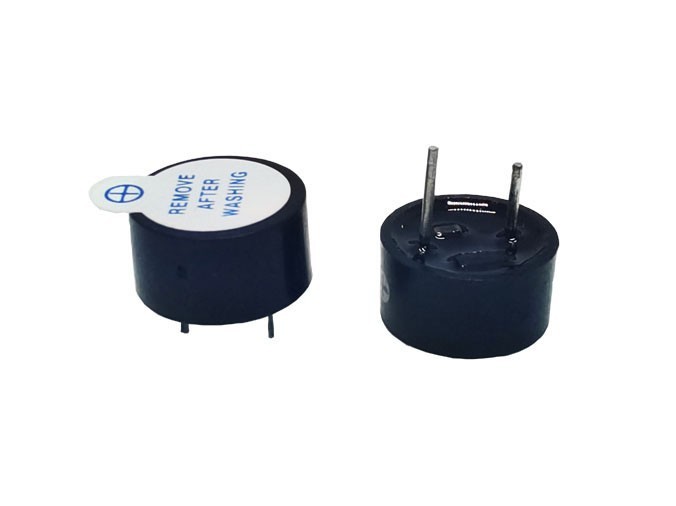


Which Is Better an Active or Passive Buzzer?
 Apr 20, 2026|
 View:805
Picture this: you're designing a new electronic product – maybe it's a smart home device, a medical alert system, or an innovative toy. Everything's coming together perfectly: the circuits are laid out, the code is written, and the housing looks sleek. But there's one small component that could make or break the user experience: the buzzer. Which do you choose – active or passive?
This isn't just a technical decision; it's a design philosophy that affects everything from user experience to manufacturing costs. Let's cut through the confusion and help you make the perfect choice for your application.
The Short Answer: It Depends (But Here's How to Know)
There's no universal "better" option – only what's better for your specific needs. The choice between active and passive buzzers boils down to one question: Do you need simplicity or flexibility?
Choose active for plug-and-play simplicity.
Choose passive for creative control.
But that's just the beginning. Let's dive deeper.
Active Buzzer: The Reliable Workhorse
What Makes It Tick?
An active buzzer is the ultimate "set it and forget it" component. Inside that unassuming casing lives a complete sound system: a built-in oscillator circuit that takes DC power and transforms it into sound. No programming, no signal generation – just pure, simple audio feedback.

Why Designers Love It
1. Effortless Integration
Active buzzers are the friendliest component in your toolbox. Connect two wires, apply power, and you get sound. This simplicity translates directly to:
Reduced development time
Lower engineering costs
Fewer potential failure points
2. Consistent Performance
When reliability matters most – in smoke detectors, security systems, or medical equipment – active buzzers deliver. Their fixed frequency means the sound never wavers, regardless of power fluctuations or environmental changes.
3. Perfect for Volume Production
At Jiangsu HUAWHA Electronics, we've seen countless manufacturers choose active buzzers for mass-produced devices. Why? Because they eliminate variables. Every unit sounds exactly the same, ensuring consistent product quality.
The Perfect Applications
Safety-critical alarms where reliability is non-negotiable
High-volume consumer electronics like microwave ovens and timers
Beginner projects and educational kits
Any application where a simple, clear beep is sufficient
Passive Buzzer: The Artist's Tool

The Power of Possibility
A passive buzzer is like a musical instrument waiting for your composition. Without an internal oscillator, it requires an external signal – typically from a microcontroller – to produce sound. This "limitation" is actually its greatest strength.
Why Innovators Choose Passive
1. Unlimited Creative Potential
Want different tones for different notifications? A custom startup melody? Interactive sound effects? The passive buzzer makes it possible. You're limited only by your code, not by the hardware.
2. Smart Power Management
Since passive buzzers only consume power when actively driven, they're perfect for battery-operated devices. Your smartwatch can play a melody when you get a notification, then sip power until the next alert.
3. Enhanced User Experience
Different sounds communicate different information. A rising tone can indicate increasing urgency. A pleasant chime can signal success. A passive buzzer lets you design an auditory language for your product.
Where Passive Shines
Interactive toys with multiple sound effects
Smart home devices that use different tones for different notifications
Musical instruments and educational tools
Advanced IoT devices requiring sophisticated user feedback
The Business Perspective: What Your Choice Really Means
Development Costs vs. Capabilities
Active buzzers typically win on upfront costs. Less development time, simpler code, and easier testing all contribute to a lower barrier to entry. But consider the long game: if your product might need sound upgrades or variations in the future, starting with a passive buzzer could save expensive redesigns later.
Manufacturing Considerations
At HUAWHA, we serve clients from prototyping to mass production. Here's what we've learned:
For Active Buzzers:
Lower unit cost in high volumes
Simplified quality control
Faster production line setup
For Passive Buzzers:
Single component serves multiple product variants
Easy to update product features via firmware
Future-proof against changing market demands
Real-World Success Stories
Case Study 1: The Smart Kitchen Timer
One of our clients initially chose an active buzzer for their kitchen timer – simple, reliable, and cost-effective. But when competitors added cheerful melodies to their products, they were stuck with a basic beep. A redesign with a passive buzzer allowed them to add multiple alarm options, creating a premium product that commanded a higher price.
Case Study 2: The Industrial Safety System
Another client designing safety equipment for factories chose active buzzers for their alarms. The consistency was crucial – workers needed to recognize the same urgent tone every time. The simplicity also meant fewer failure points in critical equipment.
How to Choose: Your Decision Matrix
Ask yourself these questions:
What's your development timeline?
Tight deadline? → Active
Time for creative development? → Passive
What's your technical expertise?
Limited programming experience? → Active
Comfortable with microcontrollers? → Passive
How will the sound be used?
Simple alerts only? → Active
Multiple notifications or melodies? → Passive
What's your production volume?
Millions of units? → Consider both; test for cost optimization
Small batches or prototypes? → Passive offers more flexibility
Is power consumption critical?
Battery-powered device? → Passive (when not sounding)
Mains-powered? → Either works
Common Myths Debunked
Myth 1: "Active buzzers are always louder."
Truth: Both types can achieve high volumes. The difference is in how they're driven. A well-designed passive system can be just as loud – sometimes louder.
Myth 2: "Passive buzzers are too complicated for production."
Truth: Modern microcontrollers make driving passive buzzers simple. Many have built-in tone libraries that handle the complexity for you.
Myth 3: "You can't switch types later."
Truth: With careful planning, you can design boards that accept either type, giving you flexibility during development and production.
The HUAWHA Advantage: Why Source From Specialists
At Jiangsu HUAWHA Electronics, we don't just sell buzzers – we provide acoustic solutions. Here's how we help our clients succeed:
Expert Guidance
Our engineers work with you to understand your application, budget, and technical requirements before recommending the perfect component.
Quality Assurance
ISO 9001:2015 certification means every buzzer – active or passive – meets rigorous quality standards. Consistent performance is built into our manufacturing process.
Custom Solutions
Need a specific sound profile? Special mounting requirements? We can customize both active and passive buzzers to your exact specifications.
Global Support
With clients in telecommunications, automotive, home appliances, and medical devices worldwide, we understand diverse market requirements and regulatory standards.
The Future of Audio Feedback
As products become smarter and more connected, the humble buzzer is evolving. We're seeing exciting trends:
Hybrid Solutions
Some advanced products use both types: an active buzzer for critical alerts and a passive one for user interface sounds. This approach combines reliability with creativity.
Intelligent Drivers
New driver chips are making passive buzzers even easier to implement, with built-in melodies and effects that reduce microcontroller workload.
Material Innovations
Advanced piezoelectric materials are creating buzzers that are smaller, louder, and more efficient than ever before.
Your Next Steps
Start with your requirements. List every sound your product needs to make, now and in the future.
Consider your team's skills. Be honest about your technical capabilities and development resources.
Prototype with both. The small investment in testing both options will pay off in better product decisions.
Consult with experts. Our team at HUAWHA offers free technical consultations to help you choose the right solution.
Conclusion: The Smart Choice Is an Informed Choice
The debate between active and passive buzzers isn't about which technology is superior – it's about which tool solves your specific problem. The right choice aligns with your technical capabilities, production requirements, and user experience goals.
At HUAWHA, we've helped thousands of clients make this decision. Whether you're building a simple timer or the next revolutionary smart device, we have the experience and components to bring your audio vision to life.
Remember: Great products don't just work – they communicate. And the right buzzer is your product's voice. Choose wisely, and that voice will speak volumes about your commitment to quality and user experience.
Ready to find your perfect buzzer solution? Contact our technical team today for personalized recommendations based on your specific project needs.