


From Appliances to Medical Devices: Specifying SMD Buzzers for Multi-Industry Alarm Designs
 Aug 27, 2026|
 View:209
From Appliances to Medical Devices
Specifying SMD Buzzers for Multi-Industry Alarm Designs
Audible alert components look small on a BOM, but they carry a heavy responsibility: telling a user when a washing cycle ends, when a smoke detector trips, or when a patient monitor detects an abnormal heartbeat. For OEM engineers and procurement teams building products across household appliances, industrial controls, security systems and medical instruments, the SMD magnetic buzzer and the SMD piezo buzzer are two of the most specified SMT alert devices on the market. Choosing correctly means balancing sound pressure, drive method, PCB footprint, power budget and certification requirements—long before mass production starts.
Why SMD Form Factor Became the Default for Modern Alarms
As electronics shrink, through-hole components are disappearing from new designs. SMT assembly lines demand components that survive reflow soldering, support automated pick-and-place and occupy minimal board height. Both the SMD magnetic buzzer and SMD piezo buzzer answer that call with footprints ranging from 4.0×4.0 mm up to 13×13 mm and profiles as low as 1.7 mm.
Changzhou Shenghui Electronic, an acoustic-component manufacturer since 1996, supplies exactly this kind of SMD portfolio—magnetic transducers in 4×4×2 mm, 5×5×2 mm and 8.5×8.5×3 mm bodies, plus SMD piezo parts in 12×12×3 mm and smaller packages. For appliance makers and medical OEMs alike, sourcing SMD parts from a single experienced factory simplifies qualification, shortens lead times and keeps acoustic consistency across batches.
Household Appliances: Loud, Low-Frequency, Cost-Sensitive
A typical appliance spec might select a 5×5×3 mm SMD magnetic buzzer at 3 Vp-p, 4 kHz, 78 dB. The MCU only needs a simple transistor switch; no boost circuit, no complex waveform generation. For cost-driven white goods produced in millions, that simplicity protects margin. Shenghui's appliance-grade magnetic buzzers are already deployed in partnerships with brands such as SUPOR, LG and Harman supply chains.
Industrial Equipment and Security: High SPL and Harsh Environments
Because a SMD piezo buzzer has no coil, it draws microamp-level idle current and emits no EMI—important near PLCs, sensors or wireless modules. In a 12 V industrial controller, engineers often pair a 12×12×3 mm SMD piezo buzzer with a small FET and MCU PWM to generate multi-stage fault tones. Passive piezo parts let one component produce "warning," "critical" and "mute" patterns from firmware alone, removing the need for several fixed-tone buzzers.

Medical Devices: Compliance, Reliability, Clear Priority Tones
Here, the split is practical:
For handheld, battery-powered devices (glucose meters, pulse oximeters), a low-current SMD magnetic buzzer at 3 V gives a familiar mid-frequency "click-complete" tone with minimal battery drain.
For patient monitors and central alarm hubs, a SMD piezo buzzer driven by a smart DAC or MCU generates the layered, harmonically rich pulses IEC 60601-1-8 expects, and sustains output across long shifts without coil fatigue.
Shenghui's medical-grade SMD buzzers are built under ISO-quality controls and tested for consistent SPL, which helps OEMs repeat compliance tests across production lots without re-qualifying the acoustic path.
Side-by-Side: SMD Magnetic Buzzer vs SMD Piezo Buzzer
| Parameter | SMD Magnetic Buzzer | SMD Piezo Buzzer |
|---|---|---|
| Principle | Coil + magnet + diaphragm | Piezo ceramic inverse effect |
| Sweet spot freq. | 1–5 kHz (low/mid) | 2–10 kHz (mid/high) |
| Typical SPL | 72–88 dB @ 10 cm | 70–80 dB @ 3 V; 90+ dB @ 12 V |
| Drive need | Low voltage, higher current | Higher voltage p-p, low current |
| EMI | Small static field | None |
| Lifetime | ~50k h | 100k+ h |
| Best fit | Appliances, wearables, portable medical | Security, industrial, multi-tone medical alarms |
Both belong on the same procurement shortlist; the right pick follows from the product's noise environment, housing resonance and software resources.
Specifying Checklist for Cross-Industry PCBs
Rated voltage and p-p swing – match 3 V, 3.3 V, 5 V or 12 V system rail.
Resonant frequency – 2.4 kHz, 2.7 kHz, 3.5 kHz or 4 kHz are common; verify in real housing.
SPL at 10 cm – appliance 70–80 dB, medical 75–85 dB, security 85+ dB.
Package – 4×4×2, 5×5×2, 8.5×8.5×3, 12×12×3 mm etc.
Active or passive – active saves firmware time; passive enables tone programming.
Reflow profile – confirm peak temp, moisture sensitivity, tape-and-reel packaging.
Certifications – RoHS, REACH, ISO 9001; IEC 60601 support docs for medical.
Shenghui provides customized voltage, frequency and dimension variants inside the SMD magnetic buzzer and SMD piezo buzzer families, so the same factory can serve a washing-machine BOM and a Class-II medical BOM without dual sourcing.
Conclusion
For sample requests, SPL curves and custom SMD buzzer drawings, reach Changzhou Shenghui Electronic's sales team at sales@shenghui.com or visit https://www.shenghui.com/Buzzer.html.
Changzhou Shenghui Electronic Co., Ltd.
Tel: 0086-519-85118108, 85108218 | Fax: 0086-519-85108596
E-mail: sales@shenghui.com, eddie@shenghui.com
Add: NO.277 Huanghe West Road, Hi-New Zone, North Changzhou, Jiangsu, China
Target keywords: SMD magnetic buzzer, SMD piezo buzzer, passive piezo buzzer, SMT buzzer, medical alarm buzzer, appliance buzzer, industrial buzzer, buzzer manufacturer China
Recommended Products
5V 102dB Passive Magnetic Buzzer
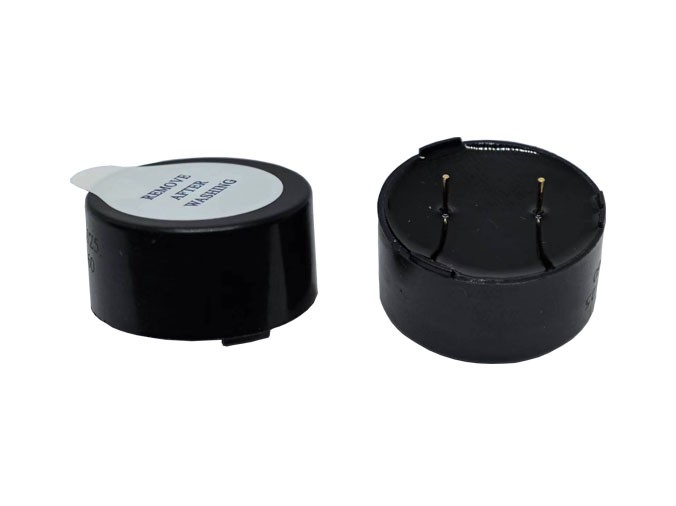
5V 90dB Passive Magnetic Buzzer
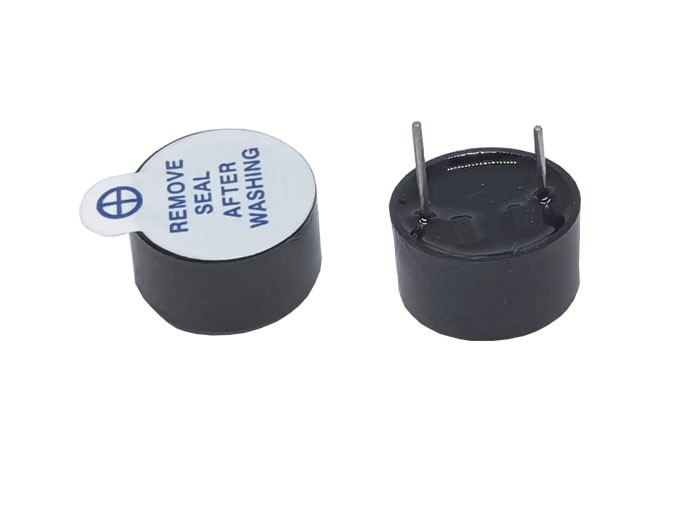
3VDC 82dB Active Magnetic Buzzer With Diameter 12MM
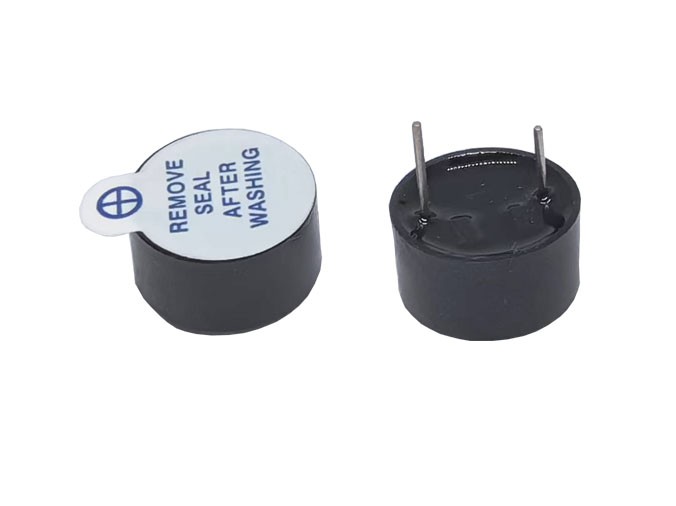
12VDC 3KHz 85dB Active Magnetic Buzzer
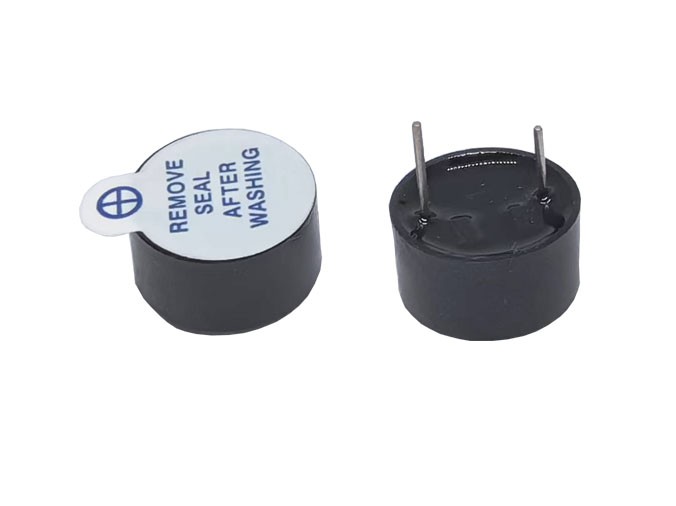
5VDC 85dB Active Magnetic Buzzer
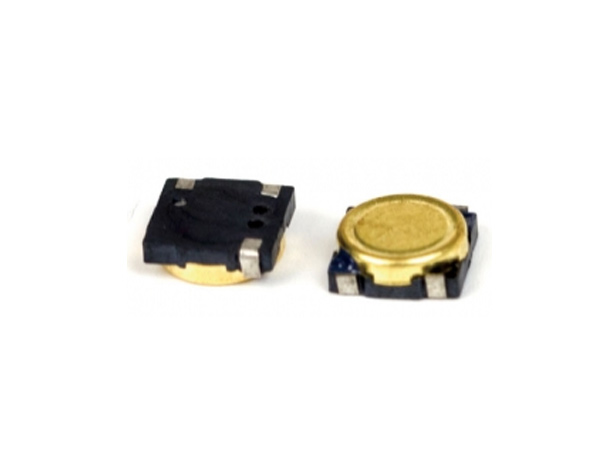
3Vp-p 4KHz 72dB SMD Magnetic Buzzer Transducer
9Vp-p 4KHz 100dB Waterproof SMD Piezo Buzzer
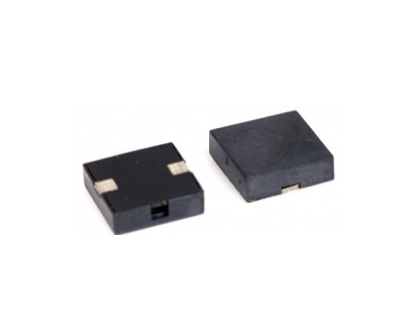
5Vp-p 5.2KHz 70dB SMD Piezo Buzzer
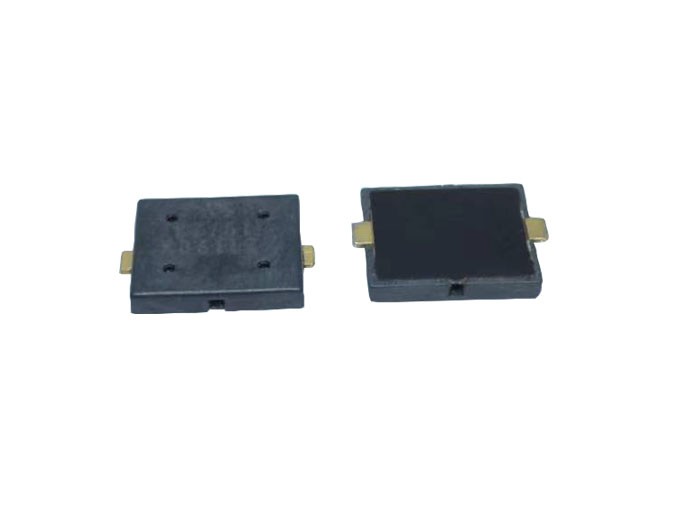
5Vp-p, 4.1KHz, 72dB SMD Piezo Buzzer
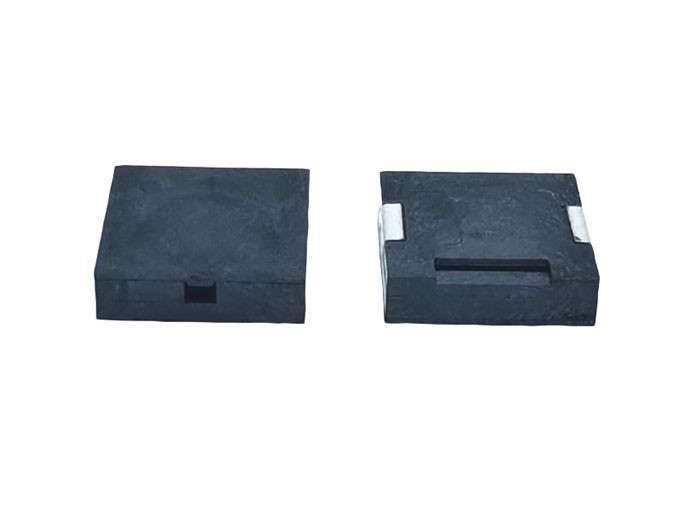
3V 4KHz 75dB SMD Piezo Buzzer 12mm
Recent News
1.The SMD Magnetic Buzzer: An Innovative Sound Solution
2024-04-232.What is a 3V Active Magnetic Buzzer?
2024-06-143.What is the difference between magnetic buzzer and piezo buzzer?
2024-08-024.What does a magnetic transducer buzzer do?
2024-08-195.Exploring the Applications of a 1.5V Passive Magnetic Buzzer
2024-04-166.The Versatility of Micro Piezo Buzzers in Modern Technology Introduction
2024-07-037.The importance of temperature control on the efficiency and lifetime of Piezoelectric Ceramic Plates
2023-03-208.Top 10 Piezoelectric (Piezo) Buzzer Manufacturers in China
2026-06-119.The Complete Guide to Piezo Buzzers: From Fundamentals to Applications
2026-05-1310.Top 10 Piezo Buzzer Manufacturers in China 2026
2026-04-10